September 13, 2026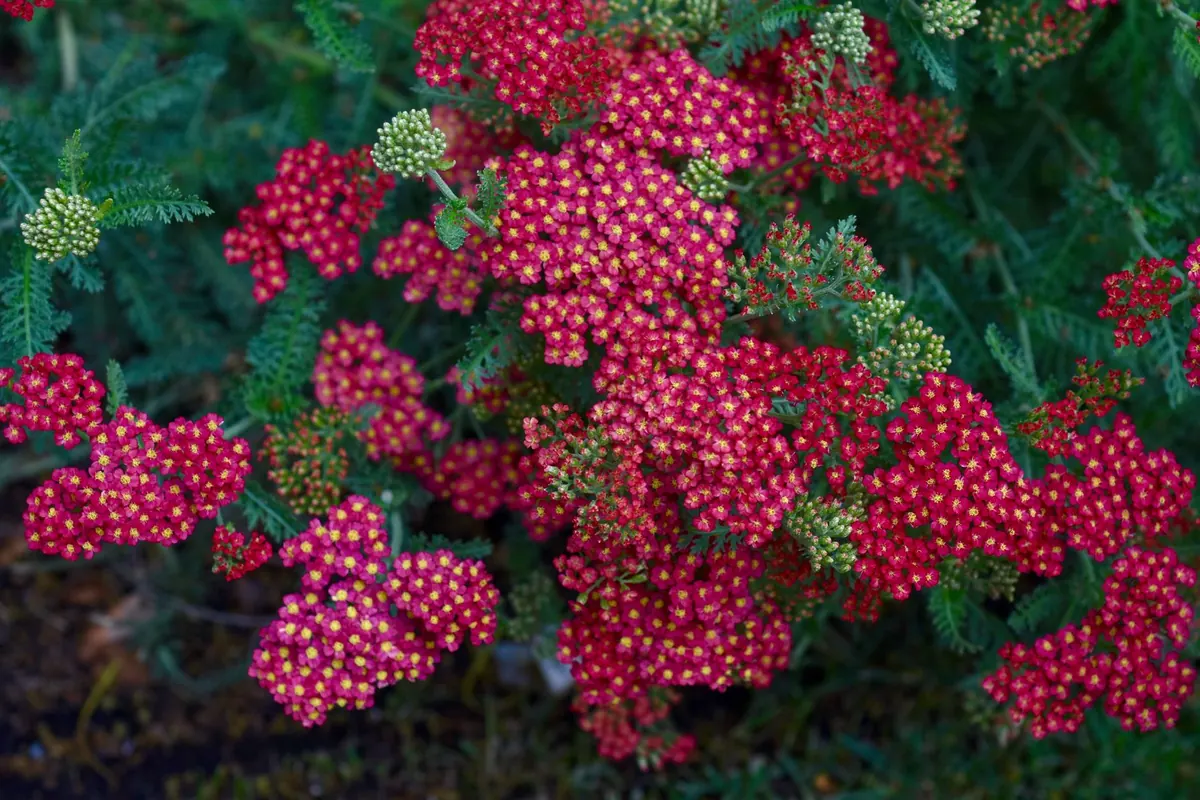
Yarrow has a reputation for being indestructible, and in the right place it nearly is. Silver-grey foliage, flat umbels of flowers that hold their colour for weeks, and a tolerance for wind and dry ground make it one of the most useful plants in a sunny border. Yet most disappointing yarrow is not unlucky. It has simply been crowded, fed, watered or sited in a way the plant never asked for. The good news is that yarrow recovers fast, and most of these corrections take an afternoon.
1. Planting too close together
A tight clump of yarrow looks generous for about six weeks, then the trouble begins. Air cannot move between the stems, so damp sits on the foliage overnight and powdery mildew arrives — that grey-white dusting on the leaves — long before the flowers have finished. Crowded roots also compete for every drop of moisture in the soil, which weakens growth and shrinks the flower heads.
The fix: give border yarrow 30–45 cm between plants and let it breathe. If you are planting a group, place them in loose threes rather than a solid block, and leave the gaps open instead of filling them with annuals. In containers, one yarrow per pot is enough. A 30 cm pot suits a compact variety such as ‘Moonshine’, while the tall yellow kinds need something wider and heavier so they do not topple.
2. Feeding it like a vegetable
Yarrow evolved on dry banks, roadside verges and stony ground. It flowers best when it has to work a little. Fork in a barrow of well-rotted manure, or scatter a general-purpose fertiliser around the roots, and you get soft sappy stems, dark green leaves, fewer flowers and a plant that collapses in the first autumn gale. All that lush growth is a magnet for aphids, too.
The fix: skip the feed. Plant into ordinary garden soil and improve the drainage rather than the richness — a bucket of horticultural grit per square metre is plenty for heavy ground. Mulch with gravel or composted bark instead of compost, and add nothing at planting time. If a plant has already gone floppy, cut it back by a third in late May; the regrowth will be sturdier and will still flower in summer.
3. Skipping the deadheading
Every spent flower head left on the plant is a signal to set seed rather than make more flowers. Leave them all and flowering tapers off by midsummer. Named cultivars also seed about freely, and the seedlings are rarely the colour you bought. You end up with a drift of wishy-washy pink where you wanted deep cerise.
The fix: keep a pair of snips in your pocket through June and July.
- Cut individual spent heads back to the next leafy shoot, not into bare stem.
- For a mass planting, take the shears across the whole flowering layer in mid-July, water once, and wait. A smaller second flush usually arrives in late summer.
- Leave a few seed heads on the tallest plants for birds and winter structure, but not all of them, or you will be pulling seedlings for years.
4. Choosing the wrong spot or the wrong variety
Yarrow wants sun — six hours or more — and ground that drains within an hour or two of heavy rain. A damp dip at the bottom of a border, heavy clay, or the shaded side of a fence will finish it. Varieties differ in habit as well, and ignoring that causes most of the flopping and spreading complaints.
Match the plant to the place
- Tall yellow forms such as ‘Gold Plate’ need staking and space at the back of a border.
- Compact grey-leaved types such as ‘Moonshine’ suit the front edge or a large pot.
- Achillea millefolium cultivars spread by runners and are best where they can roam — a gravel garden, a wild patch, a rough bank.
The fix: plant on a slight mound in heavy soil, mixing grit into the planting hole, and move any unhappy plant in early autumn while the ground is still warm.
5. Watering on a schedule
Established yarrow is drought-tolerant; soggy roots are far more dangerous than dry ones. Crown rot shows up as wilting leaves on a plant standing in wet soil, which is easy to misread as thirst and drown further.
The fix: water new plants through their first summer, then leave them alone except in a genuine drought, when a deep soak is better than a daily sprinkle. For pots, let the compost dry slightly between waterings. Before reaching for the can, push a finger in to the second knuckle. If it is wet, step away.
6. Letting clumps grow old and woody
After two or three years, many yarrow clumps go bald in the middle. The outer ring still grows, but the flowers get smaller and the stems weaker, and the whole plant sits higher out of the soil where it dries out and rocks in the wind.
The fix: divide every second or third spring, or straight after flowering in early autumn. Lift the clump, split it with two forks back to back, throw away the woody centre and replant the young outer pieces with a little grit. Water them in and keep them damp for a fortnight. This is also the quickest way to multiply a variety you like.
7. Ignoring runners and seedlings
Common yarrow spreads underground, and seedlings turn up in gravel, lawn edges and paving cracks. Left alone, a single plant can colonise a small bed in a few seasons. The seedlings of named cultivars will not come true, so a carefully chosen colour can disappear within two years.
The fix: deadhead before the seed ripens — the heads look dry and brown, and seed comes away in your hand. Pull seedlings while they are small, when the soil is damp and the roots come out easily. Run a spade down the edge of the bed each spring to sever wandering rhizomes, or plant into a bottomless bucket sunk into the ground if you want to keep one in a mixed border.
A short rescue plan
If your yarrow is mildewed, floppy and flowerless, work through these in order rather than doing everything at once.
- Check light and drainage first; if the site is wrong, move the plant in early autumn.
- Lift and respace anything planted closer than 30 cm, adding grit to the planting holes.
- Stop feeding and stop routine watering.
- Deadhead now, and shear the flowering layer in mid-July for a second flush.
- Divide congested clumps in spring, discarding the woody middle.
Yarrow is generous once the conditions suit it: lean soil, full sun, moving air and a sharp pair of shears in midsummer. Get those right and a single plant will earn its place for years, both in the border and in a vase.
Photo: Camille Cox / Pexels