September 12, 2026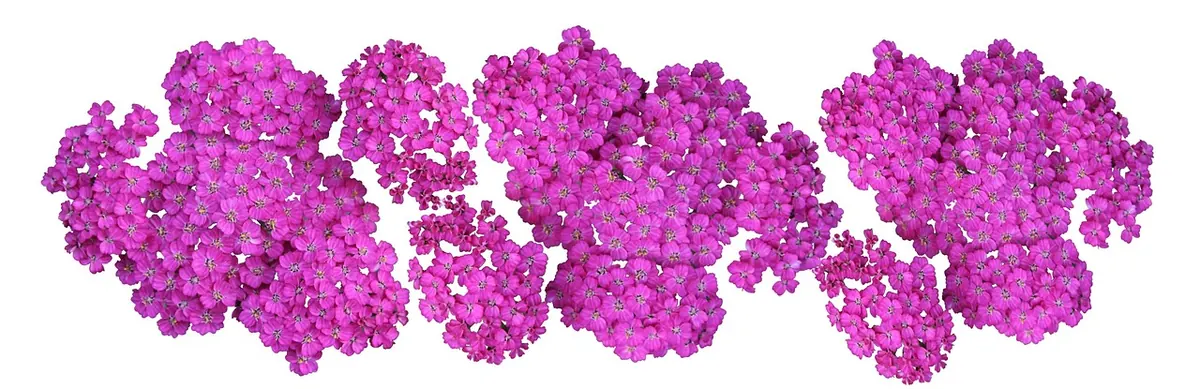
There are few plants that earn their space in a sunny border as reliably as yarrow. Flat plates of tiny flowers, finely cut grey-green foliage, and a season that runs from early summer into autumn if you deadhead. The confusion comes when you stand in front of a nursery bench and see soft yellow and vivid pink cultivars side by side. They look like variations on a theme. In the ground they behave quite differently: different heights, different flowering windows, different appetites for sun and drainage. Pick the wrong one and it will either flop over your front-edge plants or disappear behind them. Pick the right one and it will flower for months with almost no help.
Habits differ more than colours do
Before you decide on yellow or pink, decide on height and season. Most garden yarrows are cultivars or hybrids of Achillea millefolium and Achillea filipendulina, and their habits are all over the map. Compact forms sit at 30–45cm; the mid-range sits at 60–75cm; the big yellow varieties reach 1.2m or more. Flowering starts in June for most, but some continue to September, and a few are finished by early August unless cut back.
A useful rule: the taller the yarrow, the more likely it is to need staking in rich or irrigated soil. The shorter forms are usually sturdier and better for the front of a border or a gravel garden. On heavy clay, both colours will grow, but they will be looser and shorter-lived unless you improve drainage. In light, poor soil they will be tighter, smaller and longer-lived. Match the plant to the position and the colour choice becomes much easier.
It also helps to think about what the label does not tell you. A yellow yarrow might be a compact lemon 45cm plant or a 1.5m mustard giant. A pink yarrow might start flowering in early June or hold off until late July. The colour is only one axis. Height, flowering period, stem strength and foliage density matter just as much when you are trying to knit a border together. If you garden on a slope, in a raised bed or in a windy site, those practical differences will decide whether the plant looks good for years or merely for one season.
Yellow yarrows: lemon, butter and mustard
Yellow yarrow is the traditional cottage-garden choice, and the range is wider than most catalogues suggest. At the soft end is Achillea 'Moonshine', with pale lemon flowers over grey foliage. It grows to about 60cm, flowers from June to August, and is one of the best for a small garden because it holds itself up well. Bees and hoverflies work the flat heads constantly. It is also one of the most useful yellows for pairing with blues, because the lemon tone is cool rather than brassy.
At the other end is Achillea filipendulina 'Coronation Gold', a mustard-yellow plant that can reach 1.2m. It is superb for drying and for the back of a border, but give it room and stake it if your soil is generous. 'Cloth of Gold' is similar and even taller. In between sit warmer, more terracotta tones such as 'Terracotta' and 'Walther Funcke', which open yellow-orange and fade to buff — useful for linking yellow and orange plantings without shouting.
Yellow yarrows are generally the tougher, more drought-tolerant group. They resent winter wet far more than summer drought, so a gravel mulch or a raised bed suits them. If you want a plant that will survive on a hot, baked south-facing slope, a tall yellow achillea is often a better bet than a pink one. The trade-off is that the big yellows can look coarse in a small border, and their stems are more likely to splay after rain. Plant them where their height and weight are an asset, not a liability.
Pink yarrows: cerise, rose and soft lilac
Pink yarrow tends to come from Achillea millefolium breeding, and the best-known is 'Cerise Queen' — a strong magenta-cerise that flowers from June to September on 60cm stems. It is a wonderful plant in the right place and a difficult one in the wrong place. The colour is intense and can fight with reds, oranges and hot purples; set it against blue, silver or green and it settles down. It can also flop in rich soil, so cut the whole plant back by about a third in late May. You lose the first flush, but you get a bushier plant that flowers later and stands up.
Softer options include 'Lilac Beauty', a lilac-pink that flowers later in summer, and 'Summer Pastels', a seed-raised mix in muted pinks, creams and apricots. 'Paprika' brings red-orange into the pink camp, with yellow centres, and 'Red Velvet' is a deep, saturated pink-red. For a smaller garden, these mid-height pinks are easier to place than the tall yellows: they fit the middle of a border without staking.
Pink yarrows are often more refined in flower than the big yellows, but they can be fussier about drainage and fertility. In soil that is too rich, they grow soft and sappy, and the stems collapse under the weight of the flower heads. In soil that is too dry, they survive but flower less generously. The sweet spot is a sunny position with well-drained but not impoverished soil, and a modest amount of organic matter dug in before planting. If your border is irrigated regularly, choose the shorter pinks and plan to cut them back in late spring.
A quick comparison
- 'Moonshine' — 60cm; soft lemon; June–August; self-supporting; best for front or middle of a border.
- 'Coronation Gold' — 1.2m; mustard yellow; June–August; back of border; stake in rich soil.
- 'Cloth of Gold' — 1.2–1.5m; deep yellow; July–September; needs space; excellent for drying.
- 'Terracotta' — 75–90cm; orange-yellow fading to buff; June–August; bridges hot and soft colours.
- 'Cerise Queen' — 60cm; magenta-cerise; June–September; cut back in May; best with blue or silver.
- 'Lilac Beauty' — 60–75cm; soft lilac-pink; July–September; good with pastels and grasses.
- 'Paprika' — 60–75cm; red-orange with yellow centres; June–September; mid-border; vibrant but manageable.
- 'Summer Pastels' — 60cm; mixed muted pinks, creams and apricots; June–August; seed-raised; ideal for informal planting.
How to choose by border position
The quickest way to decide between yellow and pink yarrow is to work from the back of the border forwards. The back needs height, bulk and staying power; the front needs compact growth and clean foliage. In the middle, colour can be more playful, but stem strength still matters.
- Back of a large border: choose tall yellows such as 'Coronation Gold' or 'Cloth of Gold'. They give a strong vertical accent and dry beautifully.
- Middle of a mixed border: choose mid-height pinks such as 'Cerise Queen', 'Paprika' or 'Lilac Beauty'. They mix easily with grasses, salvias and nepeta.
- Front of a border or gravel garden: choose compact yellows such as 'Moonshine' or compact pinks such as 'Summer Pastels'. They stay upright without staking.
- Hot, dry, exposed site: lean towards yellow. The filipendulina types are built for heat and poor soil.
- Heavy clay or irrigated border: lean towards pink, but only the shorter cultivars, and plan to cut them back in late May.
Planting, staking and aftercare
Yarrow is not difficult, but it dislikes being pampered. Plant it in full sun, in soil that drains freely. If your soil is heavy, add grit or plant on a slight mound. Space plants according to their final height: tall yellows need 45–60cm between them, while compact pinks can sit 30–40cm apart. Water them in, then leave them alone. Once established, yarrow is more likely to suffer from overwatering than from drought.
- Plant in spring or early autumn, while the soil is warm and moist but not waterlogged.
- Water only until the roots establish, then reduce irrigation.
- Stake tall yellows in early June with a discreet ring or a few twiggy stems.
- Cut pinks back by one third in late May if your soil is rich, to prevent flopping.
- Deadhead regularly to prolong flowering into September.
- Divide clumps every three or four years in spring to keep them vigorous.
If you remember only one thing, remember this: yarrow hates winter wet far more than it hates summer drought. Good drainage is more important than rich soil.
Companions that make each colour sing
Yellow yarrow is easiest to place with blues, greys and deep greens. Salvia nemorosa, catmint, lavender, eryngium and ornamental grasses all set off lemon and mustard without competing. Avoid placing tall yellow yarrow next to bright orange crocosmia unless you want a hot, strident combination; the two can overwhelm a small border.
Pink yarrow is more versatile than its reputation suggests, but it needs calmer neighbours. Blue geraniums, stachys, bronze fennel, verbena and silver-leaved artemisia make good partners. If you want to use 'Cerise Queen' in a hotter scheme, repeat it with deep purple sage or dark red penstemon so the magenta reads as part of a deliberate palette rather than an accident. Soft pinks such as 'Lilac Beauty' and 'Summer Pastels' are much easier and will sit happily with almost any pastel or grey foliage.
Pollinators, cutting and drying
Both colours are excellent for pollinators. The flat flower heads are landing pads for bees, hoverflies, butterflies and beneficial wasps. A patch of yarrow in midsummer is one of the busiest places in the garden. If you want to support wildlife, leave the seed heads standing over winter; birds will take some, and the hollow stems can provide shelter for insects.
For cutting, pick yarrow when the flowers are fully open but before they begin to brown. Strip the lower leaves and plunge the stems into cool water. For drying, cut tall yellows such as 'Coronation Gold' just as the pollen begins to show, tie them in small bunches and hang them upside down in a dark, airy room. Pink cultivars dry well too, though their colour often deepens or fades, so test a few stems first.
Common mistakes to avoid
- Planting tall yellow yarrow at the front of a border. It will hide smaller plants and flop after rain.
- Feeding or overwatering pink yarrow. Rich, wet conditions make soft growth and weak stems.
- Choosing by flower colour alone. Check height, flowering time and drainage needs before you buy.
- Skipping the late-May cut-back on pinks. A few minutes with shears can save the whole flowering season.
- Leaving dead stems through winter in wet soil. Clean up in early spring to reduce rot and slug damage.
In the end, yellow and pink yarrow are not rivals so much as different tools. Yellow gives height, drought resistance and a long drying season. Pink gives colour, compactness and a longer flowering window in the middle of the border. If you have space, grow one of each: 'Moonshine' at the front, 'Cerise Queen' in the middle, and 'Coronation Gold' at the back. You will then have yarrow in flower from June to September, with very little work beyond deadheading and a late-spring haircut.
Photo: bluebudgie / Pixabay